





- University
- Academic
- Schools/Vocational Schools
- Vocational School of Justice
- Vocational School
- Vocational School
- Department of Banking and Insurance (Turkish)
- Department of Computer Programming (Turkish)
- Department of Foreign Trade (Turkish)
- Department of Graphic Design (Turkish)
- Department of Interior Design (Turkish)
- Department of Construction Technology (Turkish)
- Department of Occupational Health and Safety (Turkish)
- Department of Media and Communication (Turkish)
- Department of Architectural Restoration (Turkish)
- Department of Radio and Tv Programming (Turkish)
- Department of Civil Aviation Cabin Services (Turkish)
- Department of Civil Aviation Transportation Management (Turkish)
- Department of Tourism and Hotel Management (Turkish)
- Department of Applied English Translation
- Vocational School Of Health Services
- Vocational School Of Health Services
- Department of Child Development (Turkish)
- Department of Physiotherapy (Turkish)
- Department of Paramedic (Turkish)
- Department of Opticianry (Turkish)
- Department of Medical Documentation and Secreteriat (Turkish)
- Department of Medical Imaging Techniques (Turkish)
- Department of Medical Laboratory Techniques (Turkish)
- Department of Elderly Care (Turkish)
- School of Applied Management Sciences
- School of Foreign Languages
- Faculties
- Faculty of Arts and Sciences
- Faculty of Fine Arts and Design
- Faculty of Law
- Faculty of Communication
- Faculty of Business
- Faculty of Engineering
- Faculty of Engineering
- Department of Computer Engineering
- Department of Biomedical Engineering
- Department of Electrical and Electronics Engineering
- Department of Industrial Engineering
- Department of Food Engineering
- Department of Genetics and Bioengineering
- Department of Aerospace Engineering
- Department of Civil Engineering
- Department of Mechanical Engineering
- Department of Mechatronics Engineering
- Department of Software Engineering
- Faculty of Health Sciences
- Medicine
- Graduate School
- Common Courses
- Schools/Vocational Schools
- Research
- Research Centers
- Library
- Smart Campus
- Technology Transfer Office
- İzmir Sciencepark
- Continuous Education Center (EKOSEM)
- Children's University
- Ethics Committee
- Teaching and Learning Center (EKOEĞİTİM)
- Psychology Application and Research Center
- Researcher Training Coordinatorship
- Research Collaborations And Innovation Coordinatorship
- Campus
- INTERNATIONAL
- Contact
- 25TH YEAR
Department of Computer Programming (Turkish)
MBP 221 | Course Introduction and Application Information
| Course Name |
Mobile Applications and Technologies
|
|
Code
|
Semester
|
Theory
(hour/week) |
Application/Lab
(hour/week) |
Local Credits
|
ECTS
|
|
MBP 221
|
Fall/Spring
|
2
|
2
|
3
|
4
|
| Prerequisites |
None
|
|||||
| Course Language |
Turkish
|
|||||
| Course Type |
Elective
|
|||||
| Course Level |
Short Cycle
|
|||||
| Mode of Delivery | face to face | |||||
| Teaching Methods and Techniques of the Course | Problem SolvingApplication: Experiment / Laboratory / WorkshopLecture / Presentation | |||||
| National Occupation Classification | - | |||||
| Course Coordinator | - | |||||
| Course Lecturer(s) | ||||||
| Assistant(s) | - | |||||
| Course Objectives | The objective of this course is to inform students on application development on mobile devices and the differences in application development for mobile devices and other programmable devices, become familiar with mobile application development frameworks and gain practical experience in a team project. |
| Learning Outcomes |
The students who succeeded in this course;
|
| Course Description | Mobile devices, mobile applications and their requirements, developing mobile applications, using web services and databases in mobile applications |
| Related Sustainable Development Goals |
|
|
|
Core Courses | |
| Major Area Courses | ||
| Supportive Courses |
X
|
|
| Media and Management Skills Courses | ||
| Transferable Skill Courses |
WEEKLY SUBJECTS AND RELATED PREPARATION STUDIES
| Week | Subjects | Related Preparation |
| 1 | Introduction | |
| 2 | Mobile platforms | https://developer.android.com/?hl=tr and https://reactnative.dev/docs/getting-started |
| 3 | Fundamentals of React Native | https://reactnative.dev/docs/environment-setup |
| 4 | Environment Setup | https://reactnative.dev/docs/set-up-your-environment |
| 5 | Workflow and Running on Device | https://reactnative.dev/docs/running-on-device |
| 6 | UI and Interaction 1 | https://reactnative.dev/docs/style |
| 7 | UI and Interaction 2 | https://reactnative.dev/docs/handling-touches |
| 8 | Midterm | |
| 9 | Project Brief | |
| 10 | UI and Interaction 3 | https://reactnative.dev/docs/network |
| 11 | Debugging | https://reactnative.dev/docs/debugging |
| 12 | Testing | https://reactnative.dev/docs/testing-overview |
| 13 | Performance | https://reactnative.dev/docs/performance |
| 14 | Project Presentations | |
| 15 | Project Presentations | |
| 16 | Final |
| Course Notes/Textbooks | |
| Suggested Readings/Materials |
EVALUATION SYSTEM
| Semester Activities | Number | Weigthing |
| Participation | ||
| Laboratory / Application | ||
| Field Work | ||
| Quizzes / Studio Critiques |
1
|
20
|
| Portfolio | ||
| Homework / Assignments | ||
| Presentation / Jury | ||
| Project | ||
| Seminar / Workshop | ||
| Oral Exams | ||
| Midterm |
1
|
30
|
| Final Exam |
1
|
50
|
| Total |
| Weighting of Semester Activities on the Final Grade |
2
|
50
|
| Weighting of End-of-Semester Activities on the Final Grade |
1
|
50
|
| Total |
ECTS / WORKLOAD TABLE
| Semester Activities | Number | Duration (Hours) | Workload |
|---|---|---|---|
| Theoretical Course Hours (Including exam week: 16 x total hours) |
16
|
2
|
32
|
| Laboratory / Application Hours (Including exam week: '.16.' x total hours) |
16
|
2
|
32
|
| Study Hours Out of Class |
0
|
||
| Field Work |
0
|
||
| Quizzes / Studio Critiques |
1
|
10
|
10
|
| Portfolio |
0
|
||
| Homework / Assignments |
0
|
||
| Presentation / Jury |
0
|
||
| Project |
0
|
||
| Seminar / Workshop |
0
|
||
| Oral Exam |
0
|
||
| Midterms |
1
|
16
|
16
|
| Final Exam |
1
|
30
|
30
|
| Total |
120
|
COURSE LEARNING OUTCOMES AND PROGRAM QUALIFICATIONS RELATIONSHIP
|
#
|
Program Competencies/Outcomes |
* Contribution Level
|
|||||
|
1
|
2
|
3
|
4
|
5
|
|||
| 1 |
To be able to have basic computer hardware and software knowledge. |
X
|
-
|
-
|
-
|
-
|
|
| 2 |
Explain web programming and network technologies and develop applications. |
X
|
-
|
-
|
-
|
-
|
|
| 3 |
Have written, verbal and non-verbal communication skills by doing team work. |
X
|
-
|
-
|
-
|
-
|
|
| 4 |
Do research, analyze and produce solutions for the problems encountered in the field. |
X
|
-
|
-
|
-
|
-
|
|
| 5 |
To be able to use basic programming languages related to the field. |
X
|
-
|
-
|
-
|
-
|
|
| 6 |
To be able to design and install a computer system that includes software, hardware, or both, meeting the basic needs of the field. |
-
|
X
|
-
|
-
|
-
|
|
| 7 |
To be able to interpret and follow current developments in the field of computer programming. |
X
|
-
|
-
|
-
|
-
|
|
| 8 |
To be able to carry professional and ethical responsibility and have awareness of professional ethics in their practices. |
X
|
-
|
-
|
-
|
-
|
|
| 9 |
To have basic theoretical and practical knowledge about mathematics, computing and computer science. |
-
|
-
|
-
|
-
|
-
|
|
| 10 |
To be able to follow the information in the field and communicate with colleagues by using English at the general level of European Language Portfolio A2. |
-
|
-
|
-
|
-
|
-
|
|
| 11 |
To be able to direct his/her education to a further level of education |
X
|
-
|
-
|
-
|
-
|
|
| 12 |
Have knowledge about occupational safety, environmental awareness and quality standards. |
-
|
-
|
-
|
-
|
-
|
|
*1 Lowest, 2 Low, 3 Average, 4 High, 5 Highest
NEWSALL NEWS


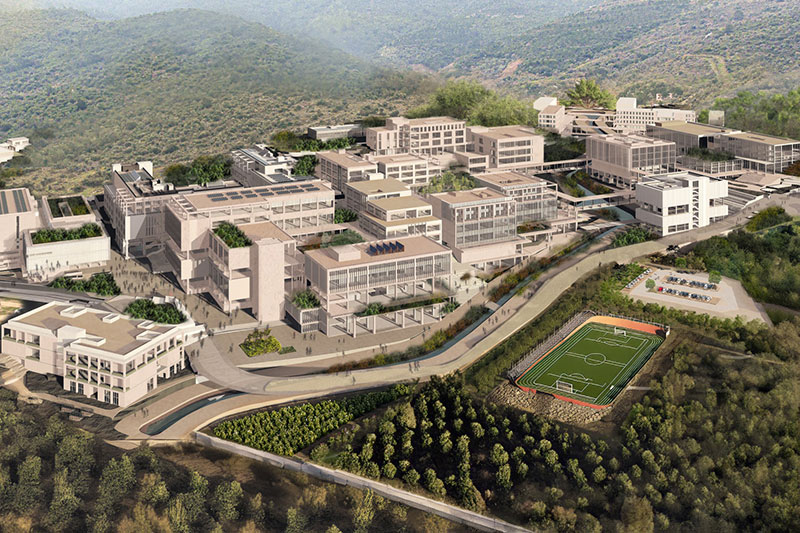
IZMIR UNIVERSITY OF ECONOMICS GÜZELBAHÇE CAMPUS
DetailsGLOBAL CAREER
As Izmir University of Economics transforms into a world-class university, it also raises successful young people with global competence.
More..CONTRIBUTION TO SCIENCE
Izmir University of Economics produces qualified knowledge and competent technologies.
More..VALUING PEOPLE
Izmir University of Economics sees producing social benefit as its reason for existence.
More..
You are one step ahead with your graduate education at Izmir University of Economics.