

- University
- Academic
- Schools/Vocational Schools
- Vocational School of Justice
- Vocational School
- Vocational School
- Department of Banking and Insurance (Turkish)
- Department of Computer Programming (Turkish)
- Department of Foreign Trade (Turkish)
- Department of Graphic Design (Turkish)
- Department of Interior Design (Turkish)
- Department of Construction Technology (Turkish)
- Department of Occupational Health and Safety (Turkish)
- Department of Media and Communication (Turkish)
- Department of Architectural Restoration (Turkish)
- Department of Radio and Tv Programming (Turkish)
- Department of Civil Aviation Cabin Services (Turkish)
- Department of Civil Aviation Transportation Management (Turkish)
- Department of Tourism and Hotel Management (Turkish)
- Department of Applied English Translation
- Vocational School Of Health Services
- Vocational School Of Health Services
- Department of Child Development (Turkish)
- Department of Physiotherapy (Turkish)
- Department of Paramedic (Turkish)
- Department of Opticianry (Turkish)
- Department of Medical Documentation and Secreteriat (Turkish)
- Department of Medical Imaging Techniques (Turkish)
- Department of Medical Laboratory Techniques (Turkish)
- Department of Elderly Care (Turkish)
- School of Applied Management Sciences
- School of Foreign Languages
- Faculties
- Faculty of Arts and Sciences
- Faculty of Fine Arts and Design
- Faculty of Law
- Faculty of Communication
- Faculty of Business
- Faculty of Engineering
- Faculty of Engineering
- Department of Computer Engineering
- Department of Biomedical Engineering
- Department of Electrical and Electronics Engineering
- Department of Industrial Engineering
- Department of Food Engineering
- Department of Genetics and Bioengineering
- Department of Aerospace Engineering
- Department of Civil Engineering
- Department of Mechanical Engineering
- Department of Mechatronics Engineering
- Department of Software Engineering
- Faculty of Health Sciences
- Medicine
- Graduate School
- Common Courses
- Schools/Vocational Schools
- Research
- Research Centers
- Library
- Smart Campus
- Technology Transfer Office
- İzmir Sciencepark
- Continuous Education Center (EKOSEM)
- Children's University
- Ethics Committee
- Teaching and Learning Center (EKOEĞİTİM)
- Psychology Application and Research Center
- Researcher Training Coordinatorship
- Research Collaborations And Innovation Coordinatorship
- Campus
- INTERNATIONAL
- Contact
- 25TH YEAR
Department of Civil Aviation Cabin Services (Turkish)
Courses
This is a compulsory English course which provides basic language skills such as reading, writing, listening and speaking at the beginning level.
The course will help students recognize the skills necessary for university life and personal development. These skills include self-awareness, goal setting, time management, effective communication, mindfulness, and analytical thinking. The course will also raise students' awareness of the habits essential for physical, mental, and spiritual health, as well as issues such as addiction and bullying.
This course consists of content derived from fields related to communication, such as psychology, sociology, anthropology, and linguistics, as well as sector-based case analyses.
National and International Civil Aviation Authority's Organizations, general organization and responsibilities, responsible captain, co-pilot, the cabin and the cabin crew duties and responsibilities, staff rules and regulations, cabin crew uniform rules, documents that is obliged to carry, team formation based on aircraft type, what to do in case of overcapacity, all definitions and requirements for flight duty limit of cabin crew
Legendary moments in world and Turkish aviation history, aircraft parts and flight controls, the logic of fundamental forces affecting flight, direction/time concepts in aviation, flight safety rules, and a basic introduction to modern flight instruments.
This course covers introducing the cabin crew profession to students in the Civil Aviation Cabin Services program, teaching the profession's requirements, and providing an overview of its history and development. Students will gain a comprehensive understanding of the basic knowledge and skills related to cabin crew duties.
This course provides a general information of the events from the end of the 19. century until the end of the Turkish War of Independence and the signing of the Treaty of Lausanne in 1923 and the following period until 1990’s.
Internship, covers field experience at any work place. Students should follow the instructions stated in IUE Internship Guide in order to successfully complete their internships.
By studying sound and breathe exercises, language structure and rules \nActivities will be done on narration style and techniques within the framework of intonation, stress and articulation rules peculiar to Turkish. Making presentation according to formal and social protocol rules and speaking rules in front of an audience will be given.
This is a compulsory English course which provides basic language skills such as reading, writing, listening and speaking at the beginning level.
Students will be taught how to use the written and verbal communication tools accurately and efficiently in this course. Various types of verbal and written statements will be examined through a critical point of view by doing exercises on understanding, telling, reading, and writing. Punctuation and spelling rules, which are basis of written statement, will be taught and accurate usage of these rules for efficient and strong expression will be provided. As for verbal statement, students will be taught how to use the body language, use accent and intonation elaborately, and use presentation techniques.
Passenger Transport Rules, Transportation of Babies and Childeren, Disabled Passengers, ill passangers, prisoner passangers, Serving Alcoholic Beverage to Passengers, Cargo, Weight and Balance Calculation, Cockpit, Cabin Crew Communication, Aircraft Fuel Purchases, Flight Preparation Instructions, Pre-Flight Check, Emergency Material Check, Demo materials, Cabin Failure Book, Security Card Cabin Crew Stations, Paging and Sound Systems, Use of electronic equipment, In Flight Entertainment Systems, Door Slide Position, Cabin Ready Report, Cabin Warning Lights, Abnormal situations in flight, Insurance, Turbulence
CRM and the importance of behavior in flight and service disruptions, online and traditional customer behavior, the cost of customer complaints, problem solving and complaint management
Within students of the vocational school, in department of Civil Aviation Cabin Services, Medical Issues and First Aid Training course; first aid regulations issued by the Ministry of Health and in accordance with the first aid training curriculum in gaining the knowledge and skills issues and frequently encountered health hazards and risks, work accidents and occupational diseases in civil aviation are located.
Hazardous material identification, classification and responsibilities in danger goods transportation, emergency procedures.
Pre-Flight Rack General control, passenger safety briefing, cockpit coarse Oxygen System Slow And Sudden Pressure Discharge of fire.
According to the conceptual model of human factors in aviation "Shell", students will learn human aviation and company procedures, with the machine, using all the skills in the relationship with the environment. Profession, Time Management, Communication, Communication and perception differences, Tiredness, work evaluation management, risk management, decision, automation, nutrition, food habit, briefing, de-briefing.
This course teaches how to communicate effectively in A2+ level general and vocational English in routine and non-routine situations, using appropriate register in the aviation context.
Internship, covers field experience at any work place. Students should follow the instructions stated in IUE Internship Guide in order to successfully complete their internships.
Catering, cabin service equipment and procedures
Evacuation and fight for survival
This course teaches how to communicate effectively in general and vocational English in routine and non-routine situations, using appropriate register in the aviation context.
Elective Courses
HYHY 201 Reservation and Ticket Sales in Aviation
Terms and considerations regarding reservation and ticket, e-ticket coupon status codes, void, refund, rebooking, rerouting procedures, infant and child fees, passenger rights on tickets
HYHY 212 Aviation Law
HYHY 220 Catering and Services
In this course, history of service and catering, service personnel, their qualifications and their personality characteristics, professional qualifications of the service staff are explained.
HYHY 221 Air Traffic Rules and Services
Air control : Air Traffic Control: Area Control
HYHY 295 AIRPORT TERMINAL MANAGEMENT
Within the scope of the airport terminal management course, students will be able to explain private-public terminal management, build-operate-transfer model, different design concepts, terminal passenger flow and facilities, and the impact of terminal operations on aircraft operations.
HYHY 296 Basic Ramp Services and Apron Safety
This course covers ramp services provided to aircraft at the airport, apron rules to be followed and airport airside operations.
HYHY 298 AIRLINE OPERATION MANAGEMENT AND PLANNING
This course covers aircraft cycle processes of airline companies; planning of processes and management of irregular operations.
HYHY 299 Sustainability and Environment in Aviation
This course covers environmental issues in the aviation industry such as carbon emissions, fuel efficiency, waste management, noise pollution and conservation of natural resources; aviation sustainability practices, regulations and industry trends.
MPAZ 114 Social Psychology
MTOI 207 Total Quality Management
MTOI 220 Coaching, Leadership and Career Management
Basic Coaching Information, Coaching and Leadership Competencies, Leadership Styles, Values and Its Importance in Coaching, Effective Expression and Communication Techniques, Recognition and Application of Coaching Tools will be covered in the lecture.
MTOI 230 Consumer Behavior
The role of consumer behavior in marketing; consumer psychology, neuroscience, anthropology and sociology; consumer buying behavior and digital consumption and markets will be the main topics of the course.
SHKH 117 World Civilations and Destinations
Details regarding the cultures dominant in various regions of the world and Turkey, intercultural communication dynamics, and their reflections on cabin services. Geographical and cultural information regarding national and international important destinations within a airline's network structure.
SHKH 197 Psychology and Physiology of Flight
Affects of flight psychology and physiology and consequently cases are examined in detail.
SHKH 198 Basic Meteorology
SHKH 213 Interview Techniques in Aviation
The course comprises the methods and techniques to be prepared and successful in the, interviews that are the first step in selecting flight attendants for airlines.
SHKH 221 Protocol and Rules of Social Behavior
SHKH 222 General Aircraft Information
Basic principles related to the plane, aircraft, aircraft components
SHKH 292 Ground Services Management
Check-in, baggage operations, passenger acceptence to the airplane; loading, unloading, stairs cleaning, air services, cargo and mail services, flight operations, load control and communication services training.
SHKH 294 Airline Management
This course covers the historical development of Airline Management, Air transport regulatory authorities, trends in the airline industry, challenges and strategies, airline business organization, passenger demand marketing, pricing, programming principles
SHKH 298 Case Study in Civil Aviation
This course is a detailed examination of significant events and accidents in aviation history, aiming to equip students with practical skills in safety and emergency management through case studies of incidents in civil aviation. The course also aims to teach students the best practices in the industry
NEWSALL NEWS


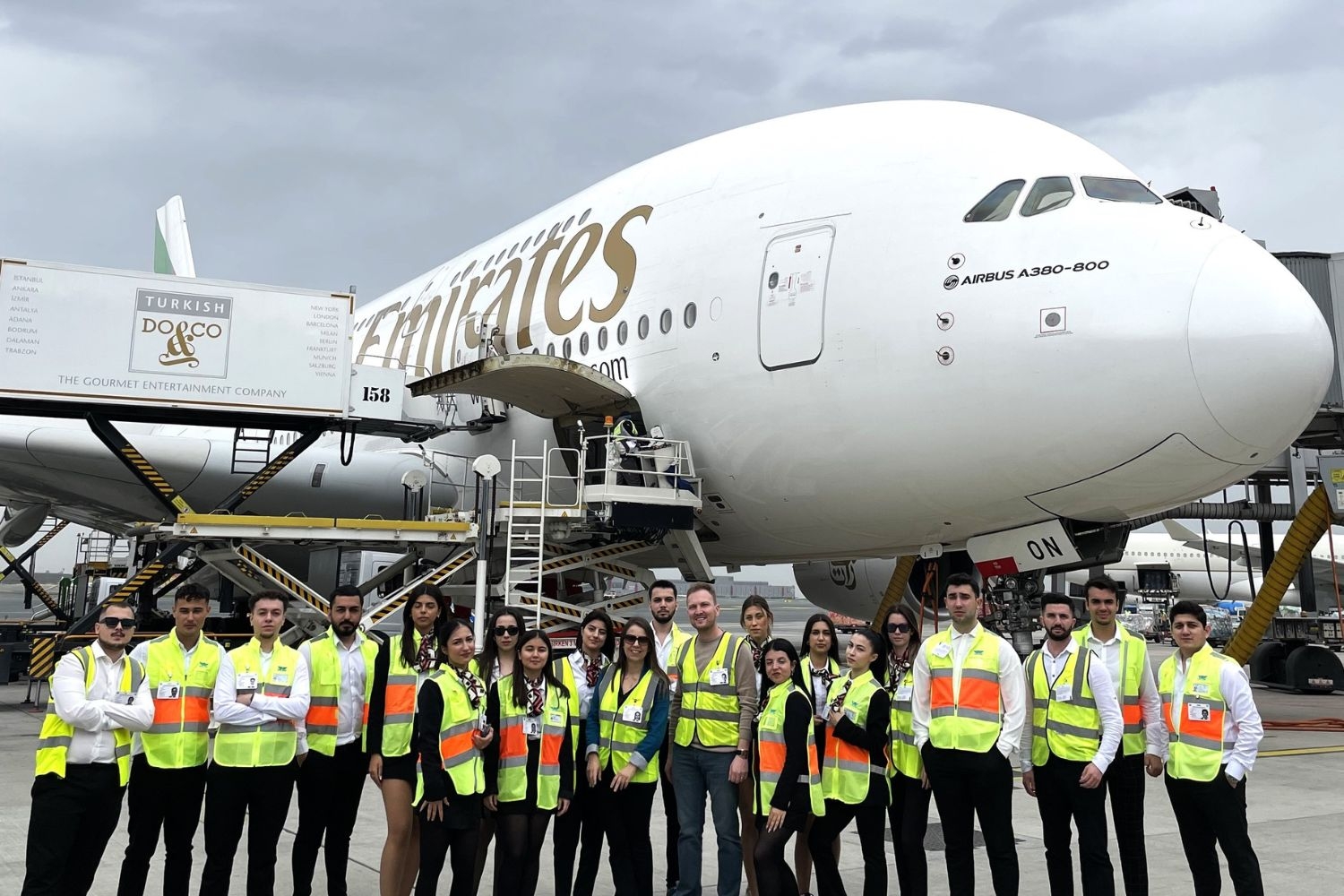
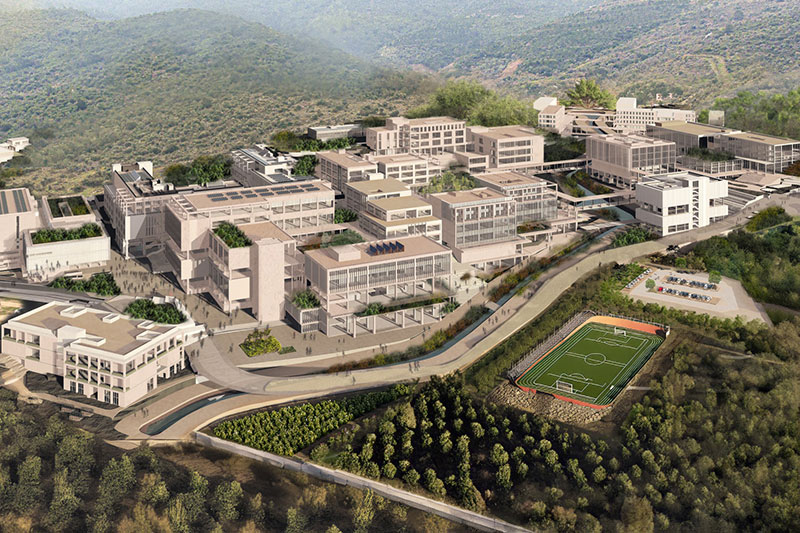
IZMIR UNIVERSITY OF ECONOMICS GÜZELBAHÇE CAMPUS
DetailsGLOBAL CAREER
As Izmir University of Economics transforms into a world-class university, it also raises successful young people with global competence.
More..CONTRIBUTION TO SCIENCE
Izmir University of Economics produces qualified knowledge and competent technologies.
More..VALUING PEOPLE
Izmir University of Economics sees producing social benefit as its reason for existence.
More..
You are one step ahead with your graduate education at Izmir University of Economics.