

- University
- Academic
- Schools/Vocational Schools
- Vocational School of Justice
- Vocational School
- Vocational School
- Department of Banking and Insurance (Turkish)
- Department of Computer Programming (Turkish)
- Department of Foreign Trade (Turkish)
- Department of Graphic Design (Turkish)
- Department of Interior Design (Turkish)
- Department of Construction Technology (Turkish)
- Department of Occupational Health and Safety (Turkish)
- Department of Media and Communication (Turkish)
- Department of Architectural Restoration (Turkish)
- Department of Radio and Tv Programming (Turkish)
- Department of Civil Aviation Cabin Services (Turkish)
- Department of Civil Aviation Transportation Management (Turkish)
- Department of Tourism and Hotel Management (Turkish)
- Department of Applied English Translation
- Vocational School Of Health Services
- Vocational School Of Health Services
- Department of Child Development (Turkish)
- Department of Physiotherapy (Turkish)
- Department of Paramedic (Turkish)
- Department of Opticianry (Turkish)
- Department of Medical Documentation and Secreteriat (Turkish)
- Department of Medical Imaging Techniques (Turkish)
- Department of Medical Laboratory Techniques (Turkish)
- Department of Elderly Care (Turkish)
- School of Applied Management Sciences
- School of Foreign Languages
- Faculties
- Faculty of Arts and Sciences
- Faculty of Fine Arts and Design
- Faculty of Law
- Faculty of Communication
- Faculty of Business
- Faculty of Engineering
- Faculty of Engineering
- Department of Computer Engineering
- Department of Biomedical Engineering
- Department of Electrical and Electronics Engineering
- Department of Industrial Engineering
- Department of Food Engineering
- Department of Genetics and Bioengineering
- Department of Aerospace Engineering
- Department of Civil Engineering
- Department of Mechanical Engineering
- Department of Mechatronics Engineering
- Department of Software Engineering
- Faculty of Health Sciences
- Medicine
- Graduate School
- Common Courses
- Schools/Vocational Schools
- Research
- Research Centers
- Library
- Smart Campus
- Technology Transfer Office
- İzmir Sciencepark
- Continuous Education Center (EKOSEM)
- Children's University
- Ethics Committee
- Teaching and Learning Center (EKOEĞİTİM)
- Psychology Application and Research Center
- Researcher Training Coordinatorship
- Research Collaborations And Innovation Coordinatorship
- Campus
- INTERNATIONAL
- Contact
- 25TH YEAR
Department of Tourism and Hotel Management (Turkish)
Courses
The course will help students recognize the skills necessary for university life and personal development. These skills include self-awareness, goal setting, time management, effective communication, mindfulness, and analytical thinking. The course will also raise students' awareness of the habits essential for physical, mental, and spiritual health, as well as issues such as addiction and bullying.
The Effective Communication Skills course is a practice-based course designed to enable students to communicate consciously, clearly, effectively, and responsibly in their personal, academic, social, and professional lives. Within the scope of the course, key topics such as the communication process, verbal and non-verbal communication, listening skills, empathy, self-presentation, body language, persuasion, conflict management, public speaking, and digital communication are addressed with a sector-based approach. In line with communication theories and contemporary examples, students have the opportunity to evaluate their own communication styles, develop strategies appropriate to different communication contexts, and strengthen their effective expression skills.
Students will be taught how to use the written and verbal communication tools accurately and efficiently in this course. Various types of verbal and written statements will be examined through a critical point of view by doing exercises on understanding, telling, reading, and writing. Punctuation and spelling rules, which are basis of written statement, will be taught and accurate usage of these rules for efficient and strong expression will be provided. As for verbal statement, students will be taught how to use the body language, use accent and intonation elaborately, and use presentation techniques.
This lesson is covered all knowledge about Travel Concept andd the History of Travel Agents, Distribution System of Tourism and Travel Agencies, Changes in Traditional Distribution Channels - Tourism, Technological Development and Innovation Effects, Activities of Travel Agents , The Importance of Travel Agencies Management and Management & Leadership Skills, Tour operators and tour wholesalers, Link between tourism and transportation, Evolution of traveler expectations, Sustainable Mobility and Its Implication for Tourism, Tour Planning and Tour Management, The service marketing approach and loyalty-based marketing, National and International Organizations, Legislation on Travel Agencies.
This course gives information about toursim and accommodation sector's improvements. Accommodation types and hotel manager's responsibilities are introduced. Housekeeping, reception, sales and marketing, food and beverage departments' operations and relationship between each other are studied.
This course is an introduction for tourism students. It containes general information about tourism. Students who pass this course successfully has general information about tourism.
This is a compulsory English course at the A1–A2 level in which reading,\nwriting, listening, and speaking skills are developed in an integrated manner.
Internship, covers field experience at any work place. Students should follow the instructions stated in IUE Internship Guide in order to successfully complete their internships.
Food and beverage course includes departmental planning, kitchen organization, menu planning, production and service stages.
This course focuses on improving mainly the comprehension (reading, listening) and communication skills of tourism students while teaching them the necessary language in real work situations of tourism business.
This course contains information about the functions of housekeeping and analysis of the application about the hotel.
At lesson; topics such as marketing basics of tourism and its elements, market segmentation, positioning, marketing environment and destination marketing and tourism marketing mix elements are examined in detail.
Students enrolled in the Tourism Management and Hospitality program develop their reading, writing, speaking, and listening skills in the field of tourism through the use of Professional German.
This course focuses on improving students' listening, reading, speaking and writing skills while teaching them the necessary language in real situations of tourism business.
This course provides a general information of the events from the end of the 19. century until the end of the Turkish War of Independence and the signing of the Treaty of Lausanne in 1923 and the following period until 1990’s.
This course is a hands-on course that enables students to apply the theoretical knowledge and professional skills they have acquired during their education in a real-world work environment; it also allows them to gain firsthand experience with business processes, organizational culture, occupational health and safety practices, professional ethical principles, and the requirements of the workplace.
Elective Courses
HYHY 220 Catering and Services
In this course, history of service and catering, service personnel, their qualifications and their personality characteristics, professional qualifications of the service staff are explained.
ING 225 Bridge to Advanced English
This course aims to teach the necessary structures and vocabulary in order to have knowledge of English at B1 level.
MEKO 190 Economics
The general Economics course enables students to understand the concepts of microeconomics and macroeconomics and to analyze daily economic events.
MTUR 104 Event Management
The Event Management course covers the concepts of events, types of events, target audience analysis, venue selection, program planning, budgeting, sponsorship, promotion, human resource management, logistics, risk management, sustainability, and post-event evaluation.
MTUR 120 Introduction to Tourism Economics
Concept of economy, tourism supply, tourism demand
MTUR 200 Anatolian Turkish Architecture
The course focuses on fundamental concepts of archaeology and architectural history. It examines the Turkish civilizations that flourished in Anatolia and their works, with particular emphasis on their period-specific characteristics. The course also introduces the concepts of historical sites and places and aims to develop an awareness of the importance of preserving historical and cultural heritage.
MTUR 201 Tourism Law
Basic Legal Concepts, Tourism Law by examining important regulation regarding the content and areas of basic law, International Tourism Law, Consumer Law and Debt Law.
MTUR 204 Human Resources Management
Human resources planning, business analysis, recruitment, training and development, career management, performance management, wage management, health and safety management
MTUR 207 Total Quality Management
Within the scope of the course, the concept of quality and the philosophy of Total Quality Management (TQM) are examined. The implementation of Total Quality Management in tourism businesses is discussed.
MTUR 215 Inventory Transactions
This course covers period-end inventory procedures, physical verification and valuation of assets and liabilities, and the related accounting adjustments. It focuses on determining balance sheet amounts, calculating net profit or loss, and preparing financial statements.
MTUR 219 Tourism Geography
This course introduces tourist destinations in Türkiye within the framework of its seven geographical regions. It also introduces major tourism regions and international destinations worldwide based on the World Tourism Organization’s classification.
MTUR 220 Coaching, Leadership and Career Management
Basic Coaching Information, Coaching and Leadership Competencies, Leadership Styles, Values and Its Importance in Coaching, Effective Expression and Communication Techniques, Recognition and Application of Coaching Tools will be covered in the lecture.
MTUR 223 Food and Personnel Hygiene
In order to enhance the hygiene of food and personel in tourism and hotel management; definition and importance of hygiene and sanitation, food hygiene before, during and after processing, personel hygiene and personal hygiene practices, causes of food decay, relationship of microorganism and human, importance of hygiene in food service, cleaning practices of enterprise, international standards of food security and hygiene, definition importance of HACCP.
MTUR 225 Entrepreneurship
Providing theoretical information on entepreneurship and formulating a business plan, analyzing successful business models, preparing and presenting business models.
MTUR 227 Crisis Management
This course consists of basic knowledge and practical info about the importance of crisis, crisis management and communication during crisis for business enterprises.
MTUR 230 Consumer Behavior
The role of consumer behavior in marketing; consumer psychology, neuroscience, anthropology and sociology; consumer buying behavior and digital consumption and markets will be the main topics of the course.
MTUR 240 Food and Beverage Services
International service methods to determine/apply, to be applied service\\nmethods in restaurant to determine/implement, service to have competence to provide care and protocol guests.
MTUR 241 Sustainable Development Goals
This course covers the 17 Sustainable Development Goals (SDGs) established by the United Nations in line with the 2030 Agenda. Within the scope of the course, the fundamental principles of these goals are examined, and their relationship with businesses in various sectors such as tourism, manufacturing, and information technologies, as well as with consumer behavior, is explored. Additionally, the concept of sustainability is discussed through its environmental, economic, and social dimensions, supported by current practices and sector-based examples. This course covers the 17 Sustainable Development Goals (SDGs) established by the United Nations in line with the 2030 Agenda. Within the scope of the course, the fundamental principles of these goals are examined, and their relationship with businesses in various sectors such as tourism, manufacturing, and information technologies, as well as with consumer behavior, is explored. Additionally, the concept of sustainability is discussed through its environmental, economic, and social dimensions, supported by current practices and sector-based examples. This course covers the 17 Sustainable Development Goals (SDGs) established by the United Nations in line with the 2030 Agenda. Within the scope of the course, the fundamental principles of these goals are examined, and their relationship with businesses in various sectors such as tourism, manufacturing, and information technologies, as well as with consumer behavior, is explored. Additionally, the concept of sustainability is discussed through its environmental, economic, and social dimensions, supported by current practices and sector-based examples.
MTUR 250 Healthcare Tourism
In this course; health tourism, thermal tourism, disabled tourism, elderly age tourism concepts will be discussed. Also; health tourism and thermal tourism practices in Turkey and the World will be examined.
MTUR 251 Business Administration
Business Functions
MTUR 253 Tourism and Environment
This course covers general concepts concerning the importance and influence of the environment in tourism development; the effects of tourism activities on the natural environment; ecological risk analysis; the importance of the environment for sustainable tourism; the balance between tourism and the environment; tourism and environmental policies in Türkiye; and national and international standards.
MTUR 260 Alternative Tourism
Important factors in the development of alternative tourism, alternative tourism types, the importance and development of alternative tourism types, application examples of alternative tourism types in the world and Turkey will be explained in this course.
MUH 190 Financial Accounting I
The student will be able to explain the basic concepts of accounting, perform the necessary accounting records by applying accounting procedures and principles, create accounting ledgers, and prepare the year-end balance sheet.
RTV 240 Corporate Communication
Basic concepts of corporate communication, corporate communication activities performed for different purposes and for different stakeholders and basic principles to be considered in these activities are discussed.
NEWSALL NEWS


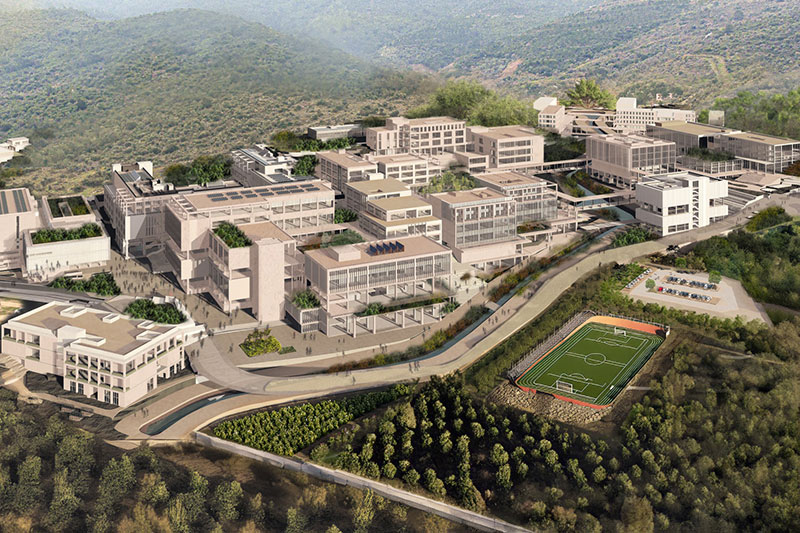
IZMIR UNIVERSITY OF ECONOMICS GÜZELBAHÇE CAMPUS
DetailsGLOBAL CAREER
As Izmir University of Economics transforms into a world-class university, it also raises successful young people with global competence.
More..CONTRIBUTION TO SCIENCE
Izmir University of Economics produces qualified knowledge and competent technologies.
More..VALUING PEOPLE
Izmir University of Economics sees producing social benefit as its reason for existence.
More..
You are one step ahead with your graduate education at Izmir University of Economics.