
- University
- Academic
- Schools/Vocational Schools
- Vocational School of Justice
- Vocational School
- Vocational School
- Department of Banking and Insurance (Turkish)
- Department of Computer Programming (Turkish)
- Department of Foreign Trade (Turkish)
- Department of Graphic Design (Turkish)
- Department of Interior Design (Turkish)
- Department of Construction Technology (Turkish)
- Department of Occupational Health and Safety (Turkish)
- Department of Media and Communication (Turkish)
- Department of Architectural Restoration (Turkish)
- Department of Radio and Tv Programming (Turkish)
- Department of Civil Aviation Cabin Services (Turkish)
- Department of Civil Aviation Transportation Management (Turkish)
- Department of Tourism and Hotel Management (Turkish)
- Department of Applied English Translation
- Vocational School Of Health Services
- Vocational School Of Health Services
- Department of Child Development (Turkish)
- Department of Physiotherapy (Turkish)
- Department of Paramedic (Turkish)
- Department of Opticianry (Turkish)
- Department of Medical Documentation and Secreteriat (Turkish)
- Department of Medical Imaging Techniques (Turkish)
- Department of Medical Laboratory Techniques (Turkish)
- Department of Elderly Care (Turkish)
- School of Applied Management Sciences
- School of Foreign Languages
- Faculties
- Faculty of Arts and Sciences
- Faculty of Fine Arts and Design
- Faculty of Law
- Faculty of Communication
- Faculty of Business
- Faculty of Engineering
- Faculty of Engineering
- Department of Computer Engineering
- Department of Biomedical Engineering
- Department of Electrical and Electronics Engineering
- Department of Industrial Engineering
- Department of Food Engineering
- Department of Genetics and Bioengineering
- Department of Aerospace Engineering
- Department of Civil Engineering
- Department of Mechanical Engineering
- Department of Mechatronics Engineering
- Department of Software Engineering
- Faculty of Health Sciences
- Medicine
- Graduate School
- Common Courses
- Schools/Vocational Schools
- Research
- Research Centers
- Library
- Smart Campus
- Technology Transfer Office
- İzmir Sciencepark
- Continuous Education Center (EKOSEM)
- Children's University
- Ethics Committee
- Teaching and Learning Center (EKOEĞİTİM)
- Psychology Application and Research Center
- Researcher Training Coordinatorship
- Research Collaborations And Innovation Coordinatorship
- Campus
- INTERNATIONAL
- Contact
- 25TH YEAR
Department of Applied English Translation
Courses
This course provides a general information of the events from the end of the 19. century until the end of the Turkish War of Independence and the signing of the Treaty of Lausanne in 1923 and the following period until 1990’s.
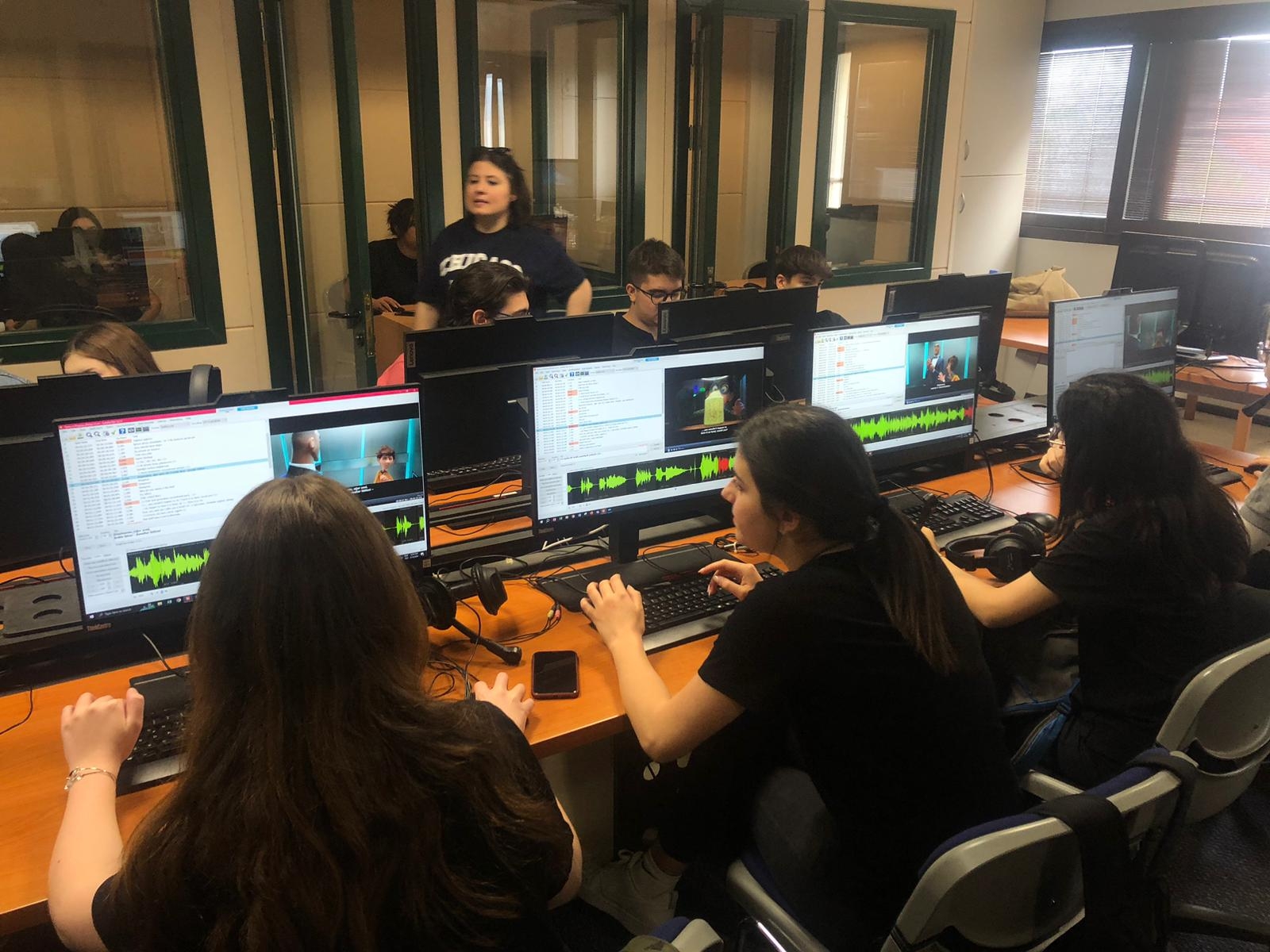
In this course, students prepare for interpreting classes. By watching and listening to texts recorded in real contexts in both audio and visual formats, students rely on their notes and memory to convey what they have heard back into the source language and summarize it in the target language.
This course enables the students to study simple and complex grammatical structures in Turkish and English and use both languages accurately and appropriately. It also provides insight into the similarities and differences between Turkish and English within the context of translation studies. Having been provided with some theoretical input about Turkish and English grammar, the students are expected to translate the given grammatical structures.
The course will help students recognize the skills necessary for university life and personal development. These skills include self-awareness, goal setting, time management, effective communication, mindfulness, and analytical thinking. The course will also raise students' awareness of the habits essential for physical, mental, and spiritual health, as well as issues such as addiction and bullying.
This course includespplication and content of the Microsoft Office programs.
In this course, students’ critical thinking and reading abilities will be advanced. This course aims to make reading activity a dynamic, critical and effective process; to enable active reading through recognition of text types; to identify reasoning strategies and developing reading skills in accordance with the validity or invalidity of arguments present in texts.
In this course, students learn the basic concepts, principals, methods and the branches of linguistics. The course also provides insight into the concept of discourse and the relationship between linguistics and translation.
Students will be taught how to use the written and verbal communication tools accurately and efficiently in this course. Various types of verbal and written statements will be examined through a critical point of view by doing exercises on understanding, telling, reading, and writing. Punctuation and spelling rules, which are basis of written statement, will be taught and accurate usage of these rules for efficient and strong expression will be provided. As for verbal statement, students will be taught how to use the body language, use accent and intonation elaborately, and use presentation techniques.
Students gain background knowledge by conducting preliminary readings from various sources in fields such as technological innovations, aviation, tourism, and learn the relevant terminology. Through these readings, students discover the norms that shape original and translated texts written in the fields of science and technology, which they can consider while making their own translations.
This course enables the students to study simple and complex grammatical structures in Turkish and English and use both languages accurately and appropriately. It also provides insight into the similarities and differences between Turkish and English within the context of translation studies. Having been provided with some theoretical input about Turkish and English grammar, the students are expected to translate the given grammatical structures.
This course introduces students to various cultures and languages from around the world, focusing on English-speaking countries. Students will have an idea about how language and culture are intertwined and how this could be exploited in translation and interpretation. They will explore this through articles, book chapters, visual resources. Also, they will learn how language represents culture through the use of idiom, collocations, jargon and a variety of vocabulary.
This course provides an introduction to the basic concepts of translation theory and focuses on the main factors and concepts involved in translation process.
In this course, the aim is to increase efficiency in translation classes by shaping students' overall approach to translation before moving on to practical translation exercises.
Internship, covers field experience at any work place. Students should follow the instructions stated in IUE Internship Guide in order to successfully complete their internships.
In this course, figurative use of language will be introduced. Literary texts taken from different works of literature (novels, short stories, plays and poems) will be translated.
In this course, students gain information about interpretation types and perform consecutive and sight translation.
Students learn the terminology and acquire background information on science, technology, architecture, engineering, tourism etc. by pre-reading authentic texts on those subjects. While exploring the norms in authentic and translated texts, the students develop their own methods in the translation process.
Internship, covers field experience at any work place. Students should follow the instructions stated in IUE Internship Guide in order to successfully complete their internships.
In this course, written translations from English to Turkish and from Turkish to English in various fields are applied, prepared works are presented, evaluated and criticised.
In this course, students gain information about interpretation types and perform consecutive and sight translation.
Elective Courses
AET 207 Translation II
This course will introduce basic concepts and strategies of translating written texts. It will enable students to apply them in practice and develop their translation skills.
AET 209 Professional Ethics
Identifying ethical issues in translation and responding effectively to the ethical challenges that translators face.
AET 225 Translation for Subtitling
The course involves analyzing through articles, lectures, and digital subtitle program sampling and students will learn about subtitle translation norms and technical specifications. There are also readings and discussions on concepts such as cultural value transfer through subtitles, competence, and acceptability in audio-visual translation.
AET 226 Translation for Specific Purposes I
In this course, a broad and holistic introduction to scientific translation will be provided. Texts taken from scientific articles pertaining to a variety of domains (biology, chemistery, physics, engineering, medicine and social sciences) will be translated from Turkish into English and vice versa.
AET 227 Translation for Specific Purposes II
In this course, students will get familiar with legal translation, raise their awareness in legal terminology and translate various types of legal texts into target language.
AET 228 International Organizations and Translation
In this course, students follow the current develeopments and relations in international institutions. Besides, they translate and interpret treaties, articles and documents in this field.
AET 231 Media Translation
The linguistic features of the various language use in print media will be examined. Different types of texts, their functions and discourse will be compared. Appropriate strategies used in translating media texts will be introduced.
AET 235 Technology and Translation
This course covers the applications of translation tools, translation memory systems, translation project management systems, and interpreting technologies that are significant in the field of translation.
AET 293 Professional Awareness of Sign Language
The Turkish Sign Language Course is a program aimed at teaching effective\\ncommunication with individuals who have hearing impairments and\\nteaching sign language. The course content includes the alphabet of sign\\nlanguage, basic concepts, and communication skills. Through practical exercises and role-playing, students gain the ability to understand and use sign language, enhancing their ability to communicate with hearing-\\nimpaired individuals in social and professional environments. This course plays a crucial role in improving communication with and providing support\\nto individuals with hearing impairments, making it indispensable for\\nprofessionals working in fields such as healthcare, education, law, and\\nsocial services.
BNK 213 Business Finance
This course covers financial statements and analysis, long-term financial planning, time value of money, stock valuation and capital management issues will be discussed.
BNK 295 Customer Relationship and Selling
With this course, students will be able to apply tools and methods for communicating with current and potential customers of the businesses they will work with, managing complaints, establishing a customer-oriented satisfaction system, and managing it.
BNK 297 Financial Literacy
The financial literacy course includes budget, savings, investment, consumption, and wants and needs. It focuses on concepts such as income and spending that will enable a person to make financial decisions.
CHN 101 Chinese Language I
The aim of this course is to enable students to acquire basic Chinese so that they can introduce themselves in daily communication, ask for and provide basic personal information (name, nationality, hometown, age, profession), and describe basic family and appearance details. It also introduces students to the Chinese language and culture, laying a solid foundation for further language study.
FR 103 French Language I
This course is designed to prepare students for introduce themselves and others, read, understand, and fill registration forms, ask questions and answer about personal information, describe physical appearance, shop at the market, order in a restaurant, and give direction.
GER 101 German Language I
In this course, basic language learning skills, reading, writing, speaking and listening skills, are developed by using visual, auditory and written texts about countries and languages, family members, food and beverage, living spaces, leisure activities, hobbies and daily life.
HYHY 299 Sustainability and Environment in Aviation
This course covers environmental issues in the aviation industry such as carbon emissions, fuel efficiency, waste management, noise pollution and conservation of natural resources; aviation sustainability practices, regulations and industry trends.
IEU 200 Volunteering Studies
This course includes theoretical and practical processes related to the concept of volunteering, focusing on humanitarian, social, and cultural issues and values, and emphasizes sustainable projects.
ITL 103 Italian Language I
The course is designed to prepare students for expressing topics such as introducing themselves or others, ordering, leisure activities, making a hotel reservation and expressing concerns encountered.
JPN 101 Japanese Language I
This course is designed to teach the students all the Hiragana and Katakana Japanese alphabets, to introduce the Kanji alphabet and to teach basic Japanese grammar.
MBP 251 Artificial Intelligence and Blockchain
This course includes the basic concepts and methods of Blockchain and artificial intelligence, machine learning, deep learning, Python programming language, artificial neural networks.
MISG 101 Occupational Health And Safety
Risk groups of employees. Occupational health, importance of occupational health outlook, occupational health basics, occupational disease, the definition of work-related diseases-causes and prevention, occupational diseases related to chemical, physical and biological risks of accidents at work, occupational health criteria and application areas, Health the right to security, safety culture concept
MMVD 212 Quality and Assurance Standards
This course includes building the infrastructure of the quality management system, applying quality standards, and applying statistical quality control methods.
MPAZ 110 Presentation Techniques
Concepts of presentation and talk, verbal and nonverbal components of communication, the process of preparing an effective presentation/talk, the problems and solutions that may arise during the presentations and talks will be discussed.
MPAZ 114 Social Psychology
MPAZ 190 Presentation Techniques
In this course, all theoretical and practical aspects of effective presentation techniques are taught with a focus on application. The course covers the written, verbal, and non-verbal elements of communication, the necessary stages for preparing an effective presentation, and the potential issues that may arise during a presentation along with their solutions.
MTOI 204 Human Resources Management
Human resources planning, business analysis, recruitment, training and development, career management, performance management, wage management, health and safety management
MTOI 207 Total Quality Management
MTOI 220 Coaching, Leadership and Career Management
Basic Coaching Information, Coaching and Leadership Competencies, Leadership Styles, Values and Its Importance in Coaching, Effective Expression and Communication Techniques, Recognition and Application of Coaching Tools will be covered in the lecture.
MTOI 225 Entrepreneurship
Providing theoretical information on entepreneurship and formulating a business plan, analyzing successful business models, preparing and presenting business models.
MTOI 230 Consumer Behavior
The role of consumer behavior in marketing; consumer psychology, neuroscience, anthropology and sociology; consumer buying behavior and digital consumption and markets will be the main topics of the course.
MTOI 240 Food and Beverage Services
International service methods to determine/apply, to be applied service\\nmethods in restaurant to determine/implement, service to have competence to provide care and protocol guests.
MTOI 241 Sustainable Development Goals
This course covers the 17 Sustainable Development Goals (SDGs) established by the United Nations in line with the 2030 Agenda. Within the scope of the course, the fundamental principles of these goals are examined, and their relationship with businesses in various sectors such as tourism, manufacturing, and information technologies, as well as with consumer behavior, is explored. Additionally, the concept of sustainability is discussed through its environmental, economic, and social dimensions, supported by current practices and sector-based examples. This course covers the 17 Sustainable Development Goals (SDGs) established by the United Nations in line with the 2030 Agenda. Within the scope of the course, the fundamental principles of these goals are examined, and their relationship with businesses in various sectors such as tourism, manufacturing, and information technologies, as well as with consumer behavior, is explored. Additionally, the concept of sustainability is discussed through its environmental, economic, and social dimensions, supported by current practices and sector-based examples. This course covers the 17 Sustainable Development Goals (SDGs) established by the United Nations in line with the 2030 Agenda. Within the scope of the course, the fundamental principles of these goals are examined, and their relationship with businesses in various sectors such as tourism, manufacturing, and information technologies, as well as with consumer behavior, is explored. Additionally, the concept of sustainability is discussed through its environmental, economic, and social dimensions, supported by current practices and sector-based examples.
RTV 234 Social Media
This course examines the development of social media, its key concepts, and its role in today’s digital world. It provides students with fundamental knowledge on how social media platforms function, content creation, sharing, community management, and the development of social media strategies. Additionally, the course covers topics such as the individual, corporate, and societal impacts of social media, digital marketing, data analytics, and ethical issues. The course aims to offer both theoretical knowledge and practical experience through hands-on applications.
RTV 251 Gender
This course provides fundamental knowledge on gender terminology and equality, enabling students to gain awareness of these concepts and relate them to their daily lives.
RUS 101 Russian Language I
This course is designed to prepare students for subjects related to countries and languages, family members, food and beverage, living spaces, leisure activities, hobbies and daily life.
SPN 101 Spanish Language I
This course is designed for students to be able to introduce themselves; use classroom expressions and greetings; ask and answer questions about personal details; give a physical description of people and their personality; talk about family; express ability and opinions.
NEWSALL NEWS




IZMIR UNIVERSITY OF ECONOMICS GÜZELBAHÇE CAMPUS
DetailsGLOBAL CAREER
As Izmir University of Economics transforms into a world-class university, it also raises successful young people with global competence.
More..CONTRIBUTION TO SCIENCE
Izmir University of Economics produces qualified knowledge and competent technologies.
More..VALUING PEOPLE
Izmir University of Economics sees producing social benefit as its reason for existence.
More..
You are one step ahead with your graduate education at Izmir University of Economics.