

- University
- Academic
- Schools/Vocational Schools
- Vocational School of Justice
- Vocational School
- Vocational School
- Department of Banking and Insurance (Turkish)
- Department of Computer Programming (Turkish)
- Department of Foreign Trade (Turkish)
- Department of Graphic Design (Turkish)
- Department of Interior Design (Turkish)
- Department of Construction Technology (Turkish)
- Department of Occupational Health and Safety (Turkish)
- Department of Media and Communication (Turkish)
- Department of Architectural Restoration (Turkish)
- Department of Radio and Tv Programming (Turkish)
- Department of Civil Aviation Cabin Services (Turkish)
- Department of Civil Aviation Transportation Management (Turkish)
- Department of Tourism and Hotel Management (Turkish)
- Department of Applied English Translation
- Vocational School Of Health Services
- Vocational School Of Health Services
- Department of Child Development (Turkish)
- Department of Physiotherapy (Turkish)
- Department of Paramedic (Turkish)
- Department of Opticianry (Turkish)
- Department of Medical Documentation and Secreteriat (Turkish)
- Department of Medical Imaging Techniques (Turkish)
- Department of Medical Laboratory Techniques (Turkish)
- Department of Elderly Care (Turkish)
- School of Applied Management Sciences
- School of Foreign Languages
- Faculties
- Faculty of Arts and Sciences
- Faculty of Fine Arts and Design
- Faculty of Law
- Faculty of Communication
- Faculty of Business
- Faculty of Engineering
- Faculty of Engineering
- Department of Computer Engineering
- Department of Biomedical Engineering
- Department of Electrical and Electronics Engineering
- Department of Industrial Engineering
- Department of Food Engineering
- Department of Genetics and Bioengineering
- Department of Aerospace Engineering
- Department of Civil Engineering
- Department of Mechanical Engineering
- Department of Mechatronics Engineering
- Department of Software Engineering
- Faculty of Health Sciences
- Medicine
- Graduate School
- Common Courses
- Schools/Vocational Schools
- Research
- Research Centers
- Library
- Smart Campus
- Technology Transfer Office
- İzmir Sciencepark
- Continuous Education Center (EKOSEM)
- Children's University
- Ethics Committee
- Teaching and Learning Center (EKOEĞİTİM)
- Psychology Application and Research Center
- Researcher Training Coordinatorship
- Research Collaborations And Innovation Coordinatorship
- Campus
- INTERNATIONAL
- Contact
- 25TH YEAR
Department of Applied English Translation
GER 101 | Course Introduction and Application Information
| Course Name |
German Language I
|
|
Code
|
Semester
|
Theory
(hour/week) |
Application/Lab
(hour/week) |
Local Credits
|
ECTS
|
|
GER 101
|
Fall/Spring
|
2
|
2
|
3
|
3
|
| Prerequisites |
None
|
|||||
| Course Language |
German
|
|||||
| Course Type |
Elective
|
|||||
| Course Level |
First Cycle
|
|||||
| Mode of Delivery | - | |||||
| Teaching Methods and Techniques of the Course | Lecture / Presentation | |||||
| National Occupation Classification | - | |||||
| Course Coordinator | ||||||
| Course Lecturer(s) | ||||||
| Assistant(s) | - | |||||
| Course Objectives | The aim of the course is allowing students to communicate in their daily lives using beginner level at the A1.1 Common European Framework of Reference. |
| Learning Outcomes |
The students who succeeded in this course;
|
| Course Description | In this course, basic language learning skills, reading, writing, speaking and listening skills, are developed by using visual, auditory and written texts about countries and languages, family members, food and beverage, living spaces, leisure activities, hobbies and daily life. |
| Related Sustainable Development Goals |
|
|
|
Core Courses | |
| Major Area Courses | ||
| Supportive Courses | ||
| Media and Management Skills Courses | ||
| Transferable Skill Courses |
WEEKLY SUBJECTS AND RELATED PREPARATION STUDIES
| Week | Subjects | Related Preparation |
| 1 | Introduction, general information and semester rules. Exchanging names, greeting, farewell dialogues | Chapter 1 reading about countries an languages, the alphabet and address information from the textbook (page 14 -17) |
| 2 | Countries and languages Preposition (“aus”), personal pronouns (ich, du, Sie), alphabet and address information | Chapter 2 studying family members (page 25) |
| 3 | Greeting, introducing family members (possessive pronouns “mein-dein vs.), specifying place of residence, Personal pronouns (er, sie, wir, ihr, sie) | Chapter 2 looking into countries that speak German (page 28) |
| 4 | Numbers, answering personal questions, verb (“haben”), filling out forms, foods (indefinite article “ein”, negation “kein”), Specifying quantity (singular and plural) | Chapter 3 reviewing foods and beverages (pages 36 -39) |
| 5 | Food items (yes-no questions and answers), specifying price and quantity, my most favorite dish, verb (“essen”) | Chapter 4 studying rooms and adjectives (pages 48 -19) |
| 6 | Evim ve odaları (belirli ve belirsiz tanımlıklar), ev tanımları, şahıs zamirleri (“er, sie, es”), olumsuzluk “nicht”, sıfatlar ve zıt anlamlı kelimeler, Mobilyalar (tekil-çoğul, renkler) | Chapter 4 studying furniture and colors (pages 50 -51) |
| 7 | Ev ilanları, günüm (ayrılabilir dolgular), saatler | Chapter 5 studying hours (page 61) |
| 8 | ARA SINAV HAFTASI | Looking into touristic destinations of Berlin (page 65) |
| 9 | Haftanın günleri (am, um, von-bis edatları), günün bölümleri | |
| 10 | Weather events, accusative case | Chapter 6 looking into the countries of Germany-Austria-Sweden (pages 76-77) |
| 11 | Verb questions and answers (ja, nein, doch), hobbies and leisure activities (conjugations of irregular verbs), Auxiliary verb "können" | Chapter 7 review of leisure activities (page 84) |
| 12 | Auxiliary verb "wollen", Simple past tense with auxiliary verb “haben“ | Chapter 7 simple past tense, Making a list of irregular verbs |
| 13 | Simple past tense with auxiliary verb “sein“ Oral Exam Practice - REVIEW OF THE COURSE | Oral Exam Practice |
| 14 | Oral Exam | |
| 15 | Review of the course | |
| 16 | FINAL EXAM |
| Course Notes/Textbooks | Schritte International Neu (Hueber), Lektion 1–7 (ISBN 978-3-19-301082-7) |
| Suggested Readings/Materials | PONS Wörterbuch, ISBN: 978-3-12-517466-5, Türkisch Deutsch / Deutsch – Türkisch |
EVALUATION SYSTEM
| Semester Activities | Number | Weigthing |
| Participation | ||
| Laboratory / Application | ||
| Field Work | ||
| Quizzes / Studio Critiques |
1
|
10
|
| Portfolio | ||
| Homework / Assignments |
1
|
10
|
| Presentation / Jury | ||
| Project | ||
| Seminar / Workshop |
-
|
|
| Oral Exams |
1
|
20
|
| Midterm |
1
|
20
|
| Final Exam |
1
|
40
|
| Total |
| Weighting of Semester Activities on the Final Grade |
4
|
70
|
| Weighting of End-of-Semester Activities on the Final Grade |
1
|
30
|
| Total |
ECTS / WORKLOAD TABLE
| Semester Activities | Number | Duration (Hours) | Workload |
|---|---|---|---|
| Theoretical Course Hours (Including exam week: 16 x total hours) |
16
|
2
|
32
|
| Laboratory / Application Hours (Including exam week: '.16.' x total hours) |
16
|
2
|
32
|
| Study Hours Out of Class |
14
|
1
|
14
|
| Field Work |
0
|
||
| Quizzes / Studio Critiques |
1
|
1
|
1
|
| Portfolio |
0
|
||
| Homework / Assignments |
1
|
2
|
2
|
| Presentation / Jury |
0
|
||
| Project |
0
|
||
| Seminar / Workshop |
0
|
||
| Oral Exam |
1
|
2
|
2
|
| Midterms |
1
|
2
|
2
|
| Final Exam |
1
|
4
|
4
|
| Total |
89
|
COURSE LEARNING OUTCOMES AND PROGRAM QUALIFICATIONS RELATIONSHIP
|
#
|
Program Competencies/Outcomes |
* Contribution Level
|
|||||
|
1
|
2
|
3
|
4
|
5
|
|||
| 1 |
Obtaining written language skills that would support the field of Applied English and Translation. |
-
|
-
|
-
|
-
|
-
|
|
| 2 |
Being able to use and interpret the knowledge acquired in the field of Applied English and Translation |
-
|
-
|
-
|
-
|
-
|
|
| 3 |
Being able to convey ideas and suggestions to solve problems related to the field of Applied English and Translation in written form |
-
|
-
|
-
|
-
|
-
|
|
| 4 |
Developing vocabulary skills in English and acquiring skills to apply them in the field of translation |
-
|
-
|
-
|
-
|
-
|
|
| 5 |
Acquiring basic skills and knowledge to do research in English language |
-
|
-
|
-
|
-
|
-
|
|
| 6 |
Innovative and creative thinking accompanied by the ability to apply newly-acquired knowledge not only in familiar, but also in novel and unusual contexts |
-
|
-
|
-
|
-
|
-
|
|
| 7 |
Taking responsibility as an individual and as part of the group, being open-minded, constructive and self-confident, tolerating criticism and working effectively and productively |
-
|
-
|
-
|
-
|
-
|
|
| 8 |
Internalizing the requirements of complying with the values of business ethics, being socially and scientifically ethical in every aspect of gathering, interpreting, sharing and applying data in the field of Applied English and Translation under all circumstances |
-
|
-
|
-
|
-
|
-
|
|
| 9 |
Being able to use computer programs, informatics and communication technologies as required by the field of Applied English and Translation |
-
|
-
|
-
|
-
|
-
|
|
| 10 |
Being able to evaluate the acquired knowledge and skills critically, adopting life-time learning approach, constantly updating and renewing the acquired knowldge |
-
|
-
|
-
|
-
|
-
|
|
*1 Lowest, 2 Low, 3 Average, 4 High, 5 Highest
NEWSALL NEWS


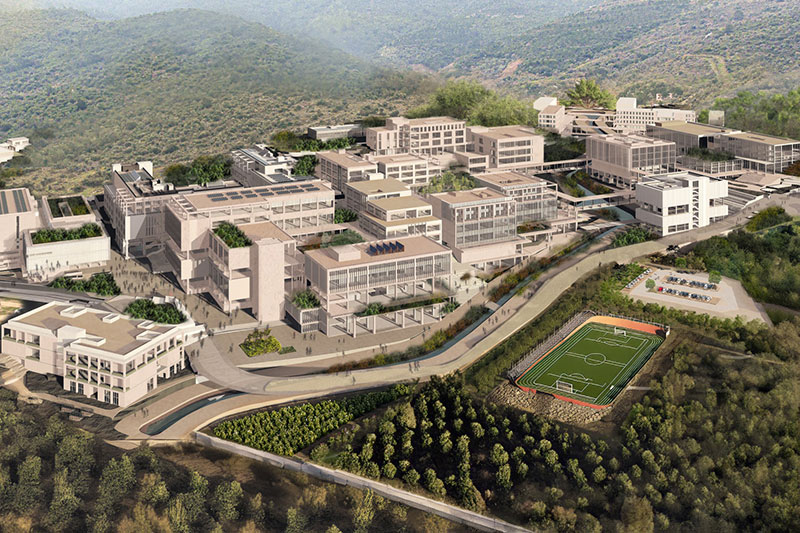
IZMIR UNIVERSITY OF ECONOMICS GÜZELBAHÇE CAMPUS
DetailsGLOBAL CAREER
As Izmir University of Economics transforms into a world-class university, it also raises successful young people with global competence.
More..CONTRIBUTION TO SCIENCE
Izmir University of Economics produces qualified knowledge and competent technologies.
More..VALUING PEOPLE
Izmir University of Economics sees producing social benefit as its reason for existence.
More..
You are one step ahead with your graduate education at Izmir University of Economics.